

If you have a business, you need a website. People expect the companies they come in contact with to have information online that they can find easily, whether they’re browsing on social media or comparing competitors’ strategies.
Creating a website is just the first step, though. The internet is a crowded place, and it’s only getting bigger. There are currently more than 1 billion websites: all competing for attention, organic traffic and search volume.
So, what does that mean to the consumer who wants to quickly and easily find your website? It means it’s up to you to make yourself visible. You need a marketing strategy that blends content marketing, paid advertising and SEO tools — plus a strong set of SEM tools to guide you along.
In the fast-moving world of digital marketing, having the right SEM tools at your fingertips is the difference between getting buried on page 2 and owning the top spot.
From keyword tracking dashboards to user-friendly interfaces that make data easier to understand in real time, here are our top picks for SEM tools that still make all the difference in 2026.
Why Do I Need SEM Tools?
You need tools because you can’t just whip up an SEM campaign, set it free and hope it brings back some leads. You need a strategy behind your marketing plans, and the best way to create intelligent SEM campaigns is by using the right tools. These allow you to surface competitor analysis, keyword ideas and PPC management insights — all of which maximize ROI.
Luckily, there are plenty of options out there; they’re easily accessible. We’re here to help you find the right SEM tools for your marketing plan.

But First, A Vital Clarification
There are a lot of acronyms in the marketing world, and some are nearly identical – like SEO and SEM. These are not the same thing, yet both play pivotal roles in an overarching digital marketing ecosystem.
You may already know what SEO stands for (but just in case, it’s “search engine optimization”). It includes all the things you do to your website to increase its ranking in search results, like targeting high-intent keywords, earning backlinks and creating quality content that’s optimized for both search engines and human readers.
SEM stands for “search engine marketing” and was once an umbrella term that included SEO as well as paid search. As internet marketing has evolved, SEO began to be thought of as its own unique entity, and SEM became colloquially synonymous with paid search, like using paid ads, creating ad groups using smart keywords and monitoring relevant metrics.
You’ll still hear some marketing pros hold to the original view that SEM is an umbrella term, and there’s no harm in that. But it’s important to note that, most of the time, SEM solely means paid search.
Ok, now that we’ve got that clarification out of the way, we can finally talk about the best SEM tools you can use today:
1. SEMRush
Cost: From $165/month
At Brafton, we use SEMRush frequently for keyword research, competitor analysis, SEO checkups and content mapping, making it one of our go-to all-in-one marketing tools. One useful feature available in SEMRush is its display advertising analyzer, which lets you watch competitors’ strategies in real time and benchmark your own PPC campaigns.
Display ads are a popular SEM technique, helping digital marketers target potential customers with keywords and images that will draw them in. SEMRush’s display ad analytics gives users the ability to review what their competitors are doing or look at various display ads that include a particular keyword.
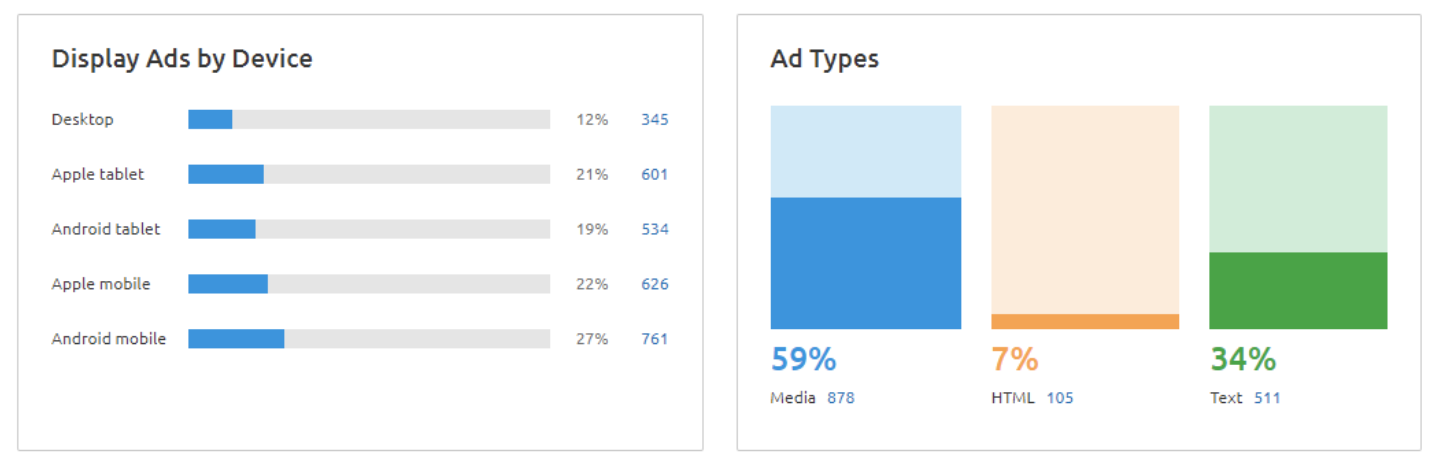
When looking at a competitor’s display ad strategy, SEMRush can even break down the types of ads they use. For example, Nike invested in a variety of ad types, focusing more on media ads but also having a healthy amount of text and a few HTML ads.
Scroll down a little further, and you can see specific examples of their ads:

Another great function within SEMRush is the competitor analysis tool. This shows you what keywords your competition is ranking for and which terms you should be targeting. With this valuable information, you can create an SEM strategy to gain traction on those keywords you may be missing out on.
Plus, the user-friendly interface makes keyword tracking straightforward, even for marketers who are new to PPC management.
2. Keyword Tool IO
Cost: From $89/month (annual subscriptions that cost more upfront but less in the long-term are available, too)
Keyword Tool is one of the more effective free SEM tools to bring into your campaign strategy because it can bolster your keyword research and uncover hidden search volume gems. Enter your keyword, and it’ll give you more than 750 long-tail keyword suggestions. It works by taking the Google Autocomplete feature and analyzing it to draw out related terms you might not find on your own.
Here’s how the autocomplete feature works: Google guesses what you’re about to type based on the most popular and trending queries that begin the same way. With this information, you can invest in the most relevant paid search terms for your audience.
Keyword Tool extracts predictions that are hidden in the Google Keyword Planner. The Keyword Tool Pro gives added insight into autocomplete suggestions for YouTube, Bing, Amazon, eBay and the App Store — expanding your reach beyond traditional search engine marketing channels.
3. Screaming Frog
Cost: The SEO Spider is free up to 500 URLs or $279/year for more.
Screaming Frog is great for running an SEO audit, which every company should do a couple of times annually. Once every quarter or every other quarter will help you quickly identify issues that are holding you back in SERPs and hurting campaign performance.
Even though this is technically more on the SEO side of things, getting to know the issues in your website is so critical for SEM that it’s worth noting here.
The Screaming Frog SEO Spider is a downloadable program. First, it’ll crawl your site and show you issues like 404 errors and broken images. It’ll also list out your page titles and H1 and H2 tags so you can review them to make sure they’re accurately descriptive and useful.
When the crawl is complete, Screaming Frog offers a feature that lets you easily create an XML sitemap. All of these features are available in the free version, but the paid platform has even more capabilities like a custom source code search, Google Analytics integration and an API key for connecting data to other dashboards.
4. Crazy Egg
Cost: From $29/month (but you get a 30-day free trial first)
Wouldn’t it be nice to be a fly on the virtual wall while your customers navigate your website? You can see what works and what doesn’t, so you can make helpful changes to the site and optimize your content journey paths.
Crazy Egg lets you be that fly!
Heat maps and recording tools let you see the journeys people take through your website. This can show you where they get stuck or confused, giving you the insights you need for smarter PPC management and higher conversion rates. What could be more helpful when trying to optimize your site for usability?
I’ll tell you: A/B testing that lets you see which version of your site works best. Yep, Crazy Egg does that, too. Best of all, you don’t need to know anything about programming to implement changes to the site to use the A/B testing capabilities.
More Great SEM Tools We Love
These four are high up on our ranking of the best SEM tools, but it’s an incomplete list. The truth is, there are tons of great services out there to help companies large and small amplify their internet marketing efforts.
Here are a few we didn’t have room to detail, but are worth checking out:
- Raven Tools for comprehensive reporting and a friendly interface.
- Google Analytics for deep dives into organic traffic and campaign performance.
- Google Ads, complete with Google Ads Editor for bulk edits to your ad workflows.
Do you have a go-to SEM tool we didn’t list here? Tell us all about it and let’s keep sharing valuable SEO and SEM knowledge.
Editor’s Note: Updated January 2026