
Throwing money at your marketing team and having them plaster social media with your brand logo won’t win over the hearts and minds of your target audience. To truly attract customers and spark meaningful social media engagement, you need creative marketing that delivers value at the right moment.
While “promotion” and “marketing” are often thought of as synonymous, there are some key differences to be aware of. As such, your business should approach its promotions as a subset of its overall marketing strategy — one that blends digital marketing, promotional marketing and inventive sales ideas to create urgency and drive conversions.
If your organization is getting ready to launch a new product, open a new location or simply wants to create buzz around existing offerings, it’s time to pump up your promotions and make sure your audience knows that you’ve got the good stuff. Pairing strategic marketing campaigns with limited-time offers can rapidly increase sales, encourage customers to act and make your competition take notice.
In this article, we’ll cover the following promotion ideas for sales promo:
- Ditch the Price Cut and Go for the Upgrade
- Support Your Loyalty Program With Gifts and an Exclusive Club Vibe
- Hyper-Targeted Sales and Promotions
- Consider a Flash Sale Promotion
- Play Hide and Seek With Event Tickets
- Bring a Sneak Peek Performance to the Streets
- Hire an Influencer
- Contests & Giveaways
- Referral Programs
- Partnerships / Co-Marketing / Cross-Promotions
- Gamification (Spin-the-Wheel, Mystery Discounts, Instant-Win)
- B2B-Specific Promotion Ideas
- E-commerce/Online Store Promotion Ideas
- Digital-Channel Promotions
- Draw Them In From the Door — Or Beyond
- Keep it Safe and Sanitized — and Make it Obvious
- You Get A Coupon, You Get A Coupon!
- Make a Splash With a Celebrity Visitor
- Make the Most of the Holidays — While Encouraging Check-Ins
- Support a Local Cause
Marketing Ideas, Advertising and Sales Promotions: What’s What?
Let’s define these concepts before we get any further:
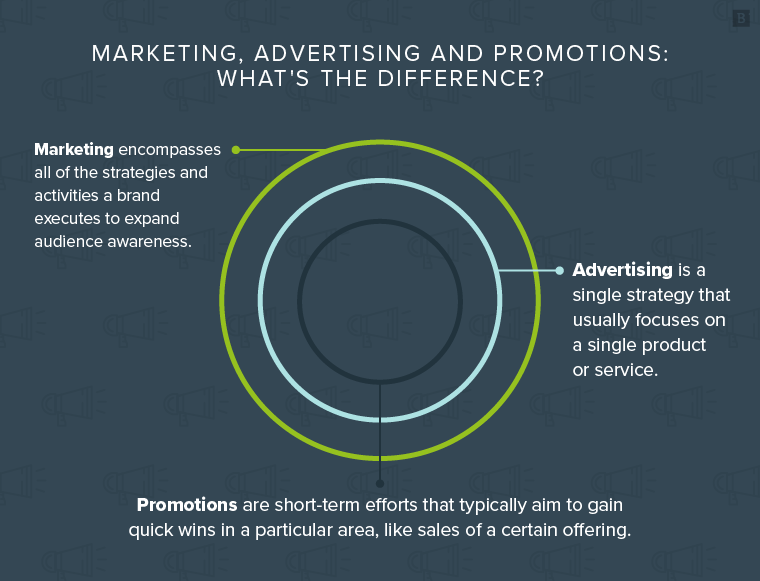
Marketing
Think of marketing as the overarching umbrella. It encompasses all of the strategies, activities, campaigns, messaging and online outreach that your brand executes to expand audience awareness. Marketing efforts include industry and audience research to make sure the brand is leveraging the right messaging in each asset.
When you stitch these tactics together into data-driven marketing strategies — from SEO and PPC to email marketing and social media engagement — you build a cohesive engine that consistently elevates brand awareness and fuels future product launch success.
Advertising
Advertising is just a single strategy under the umbrella of marketing, typically with the purpose of calling attention to and/or educating the company’s audience about a certain product or offering. Advertising is also typically an ongoing process, where goals include boosting customer loyalty, increasing brand awareness and raising visibility around the brand’s products services portfolio across multiple channels.
Promotion
Sales promotion efforts and approaches may overlap a bit with advertising — i.e., a business might use a traditional ad as part of its sales promotion strategy. However, the key difference here is that where advertising is usually part of a continual campaign focused on increasing loyal customers or educating the audience, sales promotions are shorter-term.
The goal of a promotion, more often than not, is to boost sales, garner attendees for an event and/or increase revenues in a “quick-wins” kind of way. This usually involves the use of customer incentives to support purchasing motivation, such as limited-time offers that create urgency.
A simple example is a brand offering deep discounts for an after-holiday sale. Customers benefit from lower prices, and the brand breeds a sense of urgency while clearing out last year’s inventory and improving retail execution metrics. What Are the Main Differences?
At first glance, marketing, advertising and promotion seem like they mean the same thing — but there are slight differences that are important to note! Here are the main differences:
- Marketing: A step-by-step strategy that involves product, price, place and promotion — otherwise known as “the 4 P’s of marketing.” Advertising: Advertising is a one-way communication from you to potential customers, and it’s often paid for as part of larger marketing campaigns.
- Promotion: Promotions can refer to any sort of marketing communication, usually designed to accelerate conversions or spark immediate action.
Subscribe to
The Content Marketer
Get weekly insights, advice and opinions about all things digital marketing.
Thanks for subscribing! Keep an eye out for a Welcome email from us shortly. If you don’t see it come through, check your spam folder and mark the email as “not spam.”
How to Choose the Right Promotion
Choosing the right promotion for your business is crucial for maximizing impact and ROI. Here’s a simple framework to guide your decision:
- Define your goal: Are you looking to boost revenue, increase brand awareness, support a product launch or re-engage past buyers?
- Know your audience: Understand who your target audience is, what motivates them and where they spend their time online and offline.
- Select the right channel: Match your promotion to the platforms your audience uses most — social media, email, SMS, in-store or online marketplaces.
- Choose the offer type: Decide whether a discount, free gift, contest, bundle or another incentive best fits your objective and audience.
- Create urgency: Layer in limited time offers, countdown timers or real-time inventory alerts so shoppers feel compelled to act quickly.
By aligning your promotion with your business goals and customer preferences, you’ll maximize your chances of success and create promotional marketing that truly resonates.
Common Promotion Mistakes and When Promotions Backfire
Promotions can be powerful, but they can also hurt your business if not managed carefully. Watch out for these common pitfalls:
- Margin erosion: Excessive discounts can eat into profits and devalue your product brand.
- Discount addiction: Customers may become conditioned to only buy when there’s a sale, reducing full-price purchases and hurting long-term profitability.
- Training customers to wait: Frequent promotions can train shoppers to delay purchases until the next deal, ultimately slowing the sales cycle.
- Poor execution: Confusing terms, limited stock or technical issues can frustrate customers and damage your reputation.
- Ignoring data: Not tracking key metrics in real time means you can’t improve future promotions or iterate on successful marketing strategies.
Plan your promotions strategically and always analyze their impact to ensure your next round of sales ideas drives sustainable growth.
20 Promotion Ideas to Drive More Sales for Your Business
You know your organization has a lot to offer — but coming up with ideas to make sure everyone else knows that is no small task. Even the most creative minds can find themselves in a rut from time to time. Luckily, we’ve collected some of the most inspirational promotion ideas to kickstart your marketing strategy — ideas attract customers, encourage customers to purchase and increase sales without sacrificing margin!

Raising Revenues Online and In-Store: Sales Promotion Ideas
It isn’t hard to get stuck in a rut with sales promotion ideas, especially if the company is working to churn creative promotions out all the time. Let’s take a look at a few unique promotion models you can consider to raise sales at your brick-and-mortar stores or e-commerce store, improve retail execution and keep your marketing campaigns fresh:
1. Ditch the Price Cut and Go for the Upgrade
Sales are so last decade. Everybody can slash prices (or create the illusion of such with red slashes and lower amounts on their price tags). But customers — especially in the B2B space — are hip to this game, and with so many different options for shopping around for goods and services, it isn’t difficult for decision-makers to discern a fair price for a brand’s offerings.
As OKsuzi Marketing CEO Suzanne Brown suggests, kick this idea to the curb and replace it with an offer to upgrade — a tactic that can increase sales without eroding perceived value.
In other words, instead of cutting prices, offer customers the next tier up (or the “premium” offering, but at the “basic” price). Another approach to consider here is to include a complimentary add-on service as the upgrade. As Brown pointed out, this won’t just help you boost revenue; it will also help your marketing team better understand which upgrade opportunities are most attractive to your core audience.
You may see this a lot with subscription-based software services. Take Microsoft’s Xbox Game Pass service, for example. It offers the “premium” product, called Ultimate, for only $1 per month for new subscribers — a limited-time offer that shows the power of creating urgency.

2. Support Your Loyalty Program With Gifts and an Exclusive Club Vibe
Customer loyalty is key, and many businesses garner it through a loyalty club. However, it’s not enough to simply have loyalty programs in place — you also have to promote them and make them worth customers’ time with personalized rewards, social media giveaways and members-only perks.
A perfect example here is Costco.
If you’re a Costco member, you’re well aware of the perks — you can shop at the warehouse stores during any regular business hours, use their gas stations with the best fuel cards and reap a whole host of other advantages (i.e., buying a 20-pack of socks and an industrial-size tub of Twizzlers in the same place). And chances are good that you received some type of gift when you signed up for your membership (in addition to all those free samples).

Costco does let non-members shop during certain hours, but their experience is considerably limited — so much so that it simply makes sense to sign up. While this membership is a bit more than the traditional loyalty program, you can take the same approach with your promotion by offering small bonus gifts when clients become members. In addition, create that exclusive club vibe by providing special offerings, services or other specials just for those in your loyalty program.
3. Hyper-Targeted Sales and Promotions
If offering an upgrade doesn’t work for your business model, fear not. Customers still love sales, discounts and promotions. And in the current age of data-driven personalization, you can take this traditional promotion to the next level.
First, as opposed to simply blanketing your entire audience with sales prices, tailor a promotion just for a certain subset of customers. Or, better yet, provide individualized discounts for top customers based on their purchasing history and other preferential data.
A great example of this is Starbucks and its mobile app. The app tracks and collects customer purchases, interactions and other data to offer hyper-personalized promotions and updates unique to each customer, based on their preferences. For example, if you buy a lot of lattes through the app, it will recognize that and perhaps show you new latte flavors that the company releases in real time.

As Voucherify Co-Founder and CMO Michal Sedzielewski noted, a laser-focused, personalized promotion like this hinges on the business being able to collect, analyze and leverage data at just the right moment. But the payoff is considerable: Targeted marketing strategies like this routinely increase sales and deepen brand loyalty.
“This means sending personalized coupons to specific segments at the right time, prompting pre-calculated cart-level discounts to upsell and eventually increase average order value, and rolling out referral and loyalty campaigns using an omnichannel approach,” Sedzielewski said.
4. Consider a Flash Sale Promotion
Targeted sales can be beneficial for repeat customers, but what about when you’re trying to bring in fresh faces? Flash sales are a great promotion idea to get potential shoppers interested in exploring your products and services. When some people are wary of trying something new, they may wait for the opportunity to try it at a discounted price. Creating a limited-time offer with a ticking clock can effectively create urgency and encourage new customers to take immediate action.
There’s an opportunity to put this special offer on display throughout your marketing campaign — not just outside of your store to intrigue passers-by, but also across your social media channels and your e-commerce store. Paid advertising, remarketing and timely email marketing sequences can work in your favor here.
5. Play Hide and Seek With Event Tickets
This is a really fun one for you, your marketing team and your customers. Leading up to your event, you can hide tickets in the local area (or in your own product packaging, a la Willy Wonka). There are a few ways you can do this:
- Make it a mystery: Promote the fact that tickets are hidden around town, but don’t reveal where they might be. This strategy lends a bit of mystery to the promotion. And, as a bonus, you can publicize when each ticket is found (or have users leverage a hashtag and post on social media) to keep the buzz going and maintain attention on your event.
- Post clues: For a more interactive experience, you can create a scavenger hunt promotion, where you offer up clues for ticket locations, boosting social media engagement in the process.
- Host social media contests: If playing hide and seek isn’t your brand’s thing, you can also host social media giveaways or contests (think “like, share and tag” mechanics) and provide event tickets as the prize.
6. Bring a Sneak Peek Performance to the Streets
If the event includes a performance element, consider breaking away from the stage and offering a preview, live in the streets, flash mob style. This theatrical approach lets you show off the talent that event attendees will be treated to, while creatively promoting the event itself and driving early event promotion buzz.
While not a real-world example, one of the best instances to come to mind is “The Office” character Andy Bernard and his fellow Sweeney Todd cast members. In this particular episode, showman Andy brings the cast of his upcoming play to (where else) the Dunder Mifflin office.
Nard Dog knows what he’s doing here. As a result of this stunt, nearly every one of his coworkers attends his performance.
Taking a page from Andy’s playbook, you can consider scaling this out to a short performance near the event location, or in a well-populated local commons area that’s popular with your target audience.
7. Hire an Influencer
You can also leverage an influencer or brand ambassador partnership to spread the word about your event. This approach comes with the added advantage of dual audiences — not only will your own core audience see this promotion from your chosen brand ambassador, but the influencer’s own group of followers will be exposed to event information as well. In this way, you extend your reach, attract customers who haven’t heard of you before and encourage customers to share your content.
However, as with any influencer partnership, it’s key to choose wisely. An invitation to an event that doesn’t align with the influencer’s brand and the interests of their audience will more than likely flop. As with any marketing and promotional tactic, there are pros and cons here.
When pulled off strategically, an influencer’s stamp of approval on your event could be just what you need to boost ticket sales and attendance. Take the #Revolvefestival from fashion brand Revolve, for instance. Despite being hosted during the very same weekend as Coachella, Revolve has been able to build attendance year after year thanks to the buzz created by brand influencers.
8. Contests & Giveaways
Running contests and giveaways is a proven way to attract and engage customers. These can be hosted on social media, via email or on your website. Prizes can range from your core offerings to exclusive experiences or branded merchandise. Contests encourage sharing, create user-generated content and can massively increase brand awareness. For even more lift, run multi-channel giveaways contests that combine social media giveaways with a follow-up save email so entrants can revisit the offer later.
9. Referral Programs
Encourage your current customers to refer friends and family by offering them incentives like discounts, free products or account credits. Referral programs can be highly effective for acquiring new customers who already trust your brand thanks to a personal recommendation, and they often deliver one of the best ROI figures in digital marketing.
10. Partnerships / Co-Marketing / Cross-Promotions
Team up with complementary brands or businesses to co-host promotions, bundle products or run joint campaigns. Partnerships let both brands tap into new audiences, share resources and amplify marketing campaigns without doubling budgets. It’s a win-win that can rapidly increase sales and strengthen credibility.
11. Gamification (Spin-the-Wheel, Mystery Discounts, Instant-Win)
Gamify your promotions with interactive elements like spin-the-wheel offers, mystery discounts or instant-win games. These tactics create excitement, encourage participation and collect valuable customer data in real time, which you can later use for more personalized marketing strategies.
12. B2B-Specific Promotion Ideas
For B2B companies, consider offering free audits, extended trials or access to exclusive case studies as promotional incentives. Such high-value offers can shorten lengthy sales cycles, demonstrate expertise and help prospects visualize success with your product brand.
13. E-commerce/Online Store Promotion Ideas
- BOGO (buy one, get one): Encourage larger purchases by offering a free item with every qualifying purchase.
- Bundles: Package related products together for a discounted price and highlight complementary products and services.
- Free shipping thresholds: Offer free shipping when customers spend a certain amount, increasing average order value.
- Abandoned-cart offers: Send follow-up emails or SMS messages with a special discount to recover lost sales.
- Tiered discounts: Incentivize higher spending with greater discounts for larger purchases.
- Free trials: Allow customers to try your product or service risk-free for a limited time, an especially powerful tactic for SaaS product launch campaigns.
14. Digital-Channel Promotions
- Email-only promotions: Send exclusive offers to your list to reward loyal subscribers; include a clear CTA that motivates readers to save email coupons for later.
- SMS Offers: Reach customers directly on their phones with limited-time offers that create urgency.
- Push notifications: Use app or browser notifications to alert users to flash sales or special events.
- Retargeting ads: Re-engage website visitors with personalized offers across social media and display networks in real time.
- Paid social offers: Run targeted ads with promotional codes, social media giveaways or shoppable posts that streamline checkout.
15. Draw Them In From the Door — Or Beyond
This strategy basically takes the flash mob performance approach for event marketing, but with a food-friendly spin. There are a few different ways a promotion like this can go:
Show iOff in a Sample Spread
While many restaurants take the approach of posting their menu in a window or door-side display, consider taking this to the next level with a sample spread of actual food. If you’ve ever been in a particularly fancy eatery that offers a cheese or dessert cart, you can probably see where this is going. It’s pretty difficult to refuse that amazing piece of chocolate cheesecake when it’s right in front of you, after all.
Instead of just showcasing your desserts, consider working with your kitchen to choose dishes that can sit out a while and still look fresh and delectable. Putting this on display for your patrons to see as they wait for seating, for example, can help your waitstaff move specials, upsell appetizers and attract customers who might otherwise walk by.
Take to the Streets
Another approach is to take that sample spread to the streets. Don’t be afraid to get creative here — you can even consider having a server walk a tray of prepared entrées or dishes in your restaurant’s local promenade or other nearby areas. The sights and smells of the actual plates customers can enjoy at your eatery might just have diners following your server back to the restaurant.
16. Keep it Safe and Sanitized — and Make it Obvious
In a post-COVID world, there’s a lingering concern for personal and public health among many shoppers. Some people may even be deterred from your establishment by a lack of visible sanitization policies or signage.
So, while it’s not outwardly a promotional idea, having candid and clear indications of cleanliness or safety can certainly have the same effect as a profound promotion. Try:
- Hand sanitizing stations.
- QR code menus, brochures or ads.
- Posted sanitation policies at the door.
- Distanced seating and checkout lines.
These visible efforts encourage customers to feel secure and share their experience on social media — a subtle yet effective form of user-generated content that boosts credibility.
17. You Get A Coupon, You Get A Coupon!
When increasing your sales is at the top of the priority list, you don’t necessarily need to focus on finding new customers. Loyal return customers are the people who would be willing to promote your business via word of mouth, but most importantly, they would do it without an incentive. Take advantage of the opportunity to hand out coupons after a specific number of visits.
You can also consider a reward referral program — offer frequent visitors a free gift if they bring in a new customer. This is a great way to ensure your existing customer base continues returning and new customers check out your place of business.
18. Make a Splash With a Celebrity Visitor
One of the best ways to bring customers to your business is by bringing a celebrity. This promotional strategy, in essence, takes the influencer marketing approach into the real world and then full circle back to social. After all, snapping a single photo of someone famous can be better than a wall full of autographed headshots.
As Toast’s Robert Hale rightly pointed out, though, not every business has the budget for this kind of promotion. In these instances, consider tapping a local celebrity who may be more inclined to help businesses in the area. Or, as Hale suggests, combine the celebrity promo with a charitable cause and donate a portion of the night’s proceeds to the organization of the star’s choosing.
One of the best examples here involves the beloved Bill Murray, who, for a promotional event, tended bar at his son’s Brooklyn restaurant, 21 Greenpoint.
19. Make the Most of the Holidays — While Encouraging Check-Ins
Holidays are some of the biggest sales days, especially for customers who’d rather focus on their guests than shopping. These special days also offer the perfect opportunity for a themed promotion tailor-made for social.
Many businesses have taken this approach. Take food service, for example. You could host a Mother’s Day brunch and encourage guests to snap photos of their eggs benny to post and check in on social. Halloween is another ideal social-friendly holiday to take advantage of. Consider hosting a costume contest where the cost of entry is a post, like and check in on social.
Promotions like these help you show off through the eyes of your customers. And, best of all, user-generated content like social media posts and check-ins are a low-cost and highly effective way to promote your brand.
20. Support a Local Cause
Sponsoring or supporting a positive effort in your local community is another fantastic way to get your name out there.
Plus, local sponsorship or donating to a charitable organization is an ideal way to humanize your brand and show that you’re committed to the local community.
This strategy can be as simple as choosing a local sports team and sponsoring the purchase of new jerseys or gear. You could also send experts to a nearby school to talk to students about your industry — and it’s a perfect photo op for social media and beyond.
Seasonal & Holiday Promotion Calendar
Planning your promotions around key seasons and holidays can help boost engagement and sales. Consider building a calendar with:
- New Year’s sales.
- Valentine’s Day specials.
- Spring clearance events.
- Summer sales.
- Back-to-school promotions.
- Black Friday/Cyber Monday deals.
- Holiday and year-end offers.
Mapping out timely marketing ideas in advance ensures you always have relevant content, helps balance your promotional cadence and keeps your pipeline full of creative marketing ideas that attract customers all year long.
Boosting sales and creating buzz around your business’s latest offering isn’t always easy, but it certainly doesn’t have to be boring. Build some creativity into your next promotional campaign with these ideas, and you’re sure to make a splash with your customers and your competition.
Editor’s Note: Updated April 2026.