
“Don’t use that tone of voice with me!”
It’s possible — if not overly likely — you heard that one once or twice while growing up. Take the wrong tone and you wouldn’t need a second warning that it wasn’t the most suitable way of talking to your parent. In that single reprimand, they helped you quickly define tone, style and intent all at once.
However, marketers are not afforded the “luxury” of such a stern yet insightful speaking-to. Readers aren’t quick to give the benefit of the doubt. Speak to them in a negative tone and you might not get soap in the mouth, but you will surely feel the sting when customers reject your blog posts and social media pages, or even products. In other words, if your brand tone voice is off, your conversion rates will be, too.
More than ever, readers want to make an emotional connection with the brands they follow or give business to. They want to read content that speaks to them — not at them, and not past them. As a marketer, you should know your target audience and how to make that content click. A robust content strategy, complete with detailed tone voice guidelines, is often the difference between a one-off visitor and a lifelong customer.

Tone of Voice Examples
- Empowering and Uplifting – Dove.
- Friendly Yet Informative – LaCroix Sparkling Water.
- Professional and Ambitious – CloudSmartz.
- Strong and Aggressive – Harley Davidson.
- So Far Out There It’s in Another Galaxy – Skittles.
- Just Straight Up Out of Pocket – Duolingo.
- Would You Like Fries With That Sick Burn – Wendy’s.
(If you’re a visual learner, try creating a quick tone of voice table to map these examples against your own brand pillars and core values. It can spark great ideas fast!)
Common Tone of Voice Examples and Characteristics
When developing a brand’s tone of voice, it’s helpful to understand the most common types and their defining characteristics. Here are several widely used tone of voice examples, along with the traits that make them effective:
- Formal: Professional, respectful and authoritative. Often used in corporate communications, legal or academic contexts. Characterized by precise language, structured sentences and avoidance of slang.
- Informal: Conversational, approachable and friendly. Common in social media and consumer-facing brands. Features relaxed grammar, colloquial expressions and a personal touch.
- Humorous: Playful, witty and entertaining. Used to engage audiences and create memorable interactions. Relies on clever wordplay, jokes and light-hearted messaging.
- Empowering: Motivational, uplifting and positive. Frequently seen in brands focused on self-improvement or wellness. Utilizes encouraging language, affirmation and calls to action.
- Aggressive: Bold, assertive and unapologetic. Often adopted by brands with a rebellious or competitive edge. Uses strong statements, confident messaging and direct challenges.
- Inspirational: Visionary, aspirational and forward-thinking. Ideal for brands that want to instill hope or drive change. Characterized by evocative language and big-picture ideas.
- Informative: Clear, educational and helpful. Perfect for brands that focus on sharing knowledge or expertise. Features straightforward explanations, facts and actionable advice.
- Quirky: Unconventional, unique and memorable. Used to stand out and capture attention. Relies on unexpected phrasing, creative storytelling and distinctive personality.
Each tone of voice type can be tailored to fit a brand’s identity and audience. The key is to remain consistent and authentic, ensuring the tone aligns with your core values and messaging across channels.
Chris Hassan emphasizes, “Whether you’re aiming for playful or professional, the most effective tone of voice is the one that feels true to your brand’s DNA and resonates with your audience’s expectations.”
Developing a Tone of Voice
Writing in a way that appeals to your readers entails a lot of things. At the top of the list of considerations is tone of voice.
The manner in which you speak to your online readership decides how engaged they are, how educated they become or how motivated to take action they grow. Your tone of voice should encapsulate all that your brand and your customers value. It should also reflect the manner of speaking that readers are most familiar with and be appropriate to the intended audience. In effect, you’re building a brand personality that mirrors their own social skills and aspirations.
So, if you were a cosmetics company with a brand strategy focused on reaching millennials using social media, you might use a fun, lighthearted tone peppered with emojis and lingo. Like, u totes get it, right? The moar your customer digs the writing, the shibbier. Want a ride-or-die readership? You best get that writing on fleek. In short, you’d create a tone of voice that feels native to the platform and its users.
However, say you’re trying to grab the attention of the C-suite audience. Your voice guideline tactics would likely shift 180 degrees. The suits would probably respond best to a formal tone that is highly professional; is condensed into short, quick-hit sentences; and stays authoritative. You want to appear knowledgeable. You want to inspire. You want to provide thought leadership and cultivate an executive following that looks to you for solutions and ideas. Consistent tone of voice here signals reliability and respect.
Finally, let’s say you’re writing about marketing best practices. Your main goal is to help readers understand how important it is to have a brand voice and style — so what do you do? You start with a conversational tone and pepper in specific examples. You inject a distinct personality into your content. You even get a little self-referential to prove a brand tone can include a little offbeat humor as well as good information. That’s right: This blog post right here shows the Brafton brand tone at work, as you’ve probably noticed by now.
Almost all forms of communication are an opportunity to interact with customers as your brand persona. Even out-of-office replies and product update emails deserve the same attention to tone guidelines as your flagship campaigns.
What Goes Into Tone of Voice?
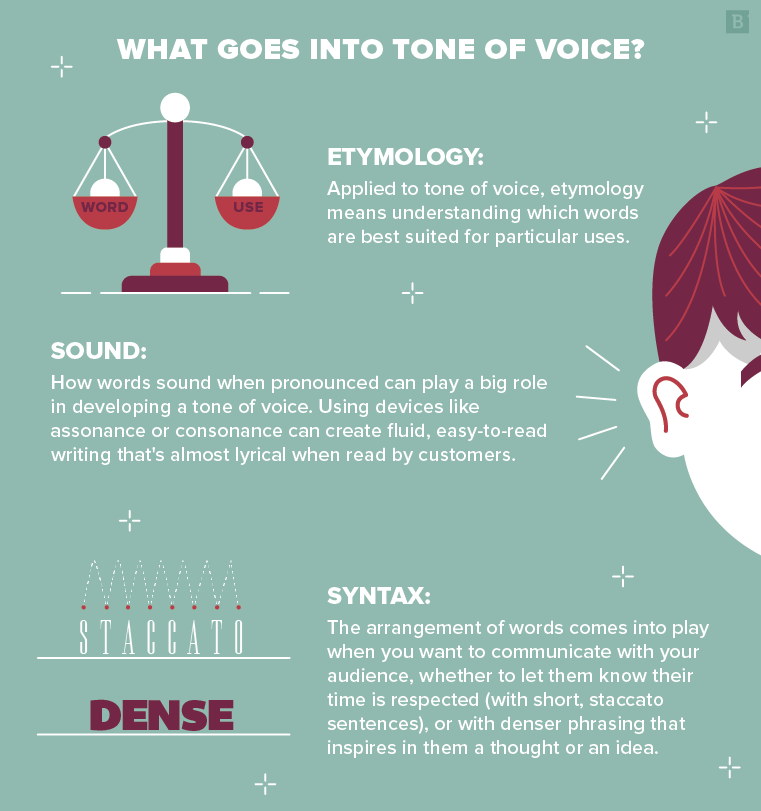
While a brand’s voice can be largely understood in theory, it can be a bit more challenging to pull off in reality. You will have to marry brand personality with grammar, customer engagement with rhetorical devices. Translating the ideas in your head to the words on the page can make for a tricky process, but not impossible. All it takes is looking at the recipe for tone of voice. A dash of diction here and some active voice there, some alliteration to taste, and presto, you’ve got your tone of voice.
While the exact ingredients may change — blog posts focused on upper management may want to trade those hashtags for hard stats — there are some common elements of any tone of voice that you will want to address when formulating your own brand’s personality. These include, but aren’t limited to:
- Etymology: You don’t have to be an English scholar to understand the importance of historical context and the meaning of words. Applied to tone of voice, etymology simply means understanding which words are best suited for particular uses. This knowledge fuels strong tone voice content.
- Sound: The sonic qualities of words — how they sound when pronounced — can play a big role in developing a tone of voice. Using devices such as assonance or consonance can create fluid, easy-to-read writing that’s almost lyrical.
- Syntax: This is basically the arrangement of words, the structure of language. It may come into play when you want short, staccato sentences. There’s no fluff. The point is underscored. The audience’s time is respected. Or, you may want to convey a headier type of thought with denser phrasing that weaves in and out and maintains an artistic quality that endeavors with soaring brand language to engage the reader and inspire in them a thought, an idea, a meaning. See how easy that is?
While these concepts can likely be found all over the internet, there’s one more you won’t be able to download a content style guide for — and that’s the part of your brand voice that’s uniquely you.
Imagine your brand and everything about it — its history, values, employees, even the colors on the company walls — has become a person. Now imagine you’re grabbing a coffee with this person. Think about things like these:
- What’s their personality like?
- Is their vocabulary rich and colorful, or simple and focused?
- How do they talk about topics they’re highly familiar with — like industry best practices or product details?
- How do they talk about things they’re still learning — like industry trends or thought leadership?
- Does their unique style make you feel a certain way?
You might have to go on quite a few “coffee dates” with your brand before you settle on one style or company voice — and that’s OK. It’s better to craft something organic than to rush ahead with something that never fits just right. Think of it as a guided tone voice activity: trial, feedback, refinement and, finally, a consistent tone that your audience can trust.
Subscribe to
The Content Marketer
Get weekly insights, advice and opinions about all things digital marketing.
Thanks for subscribing! Keep an eye out for a Welcome email from us shortly. If you don’t see it come through, check your spam folder and mark the email as “not spam.”
Brand Tone of Voice Examples
Now for the main attraction: Brand voice examples that can help demonstrate the varying degrees of personas and how they might inform your own tone of voice. Each business will have its own needs, but there’s plenty to take away from these legends of tone:
Empowering and Uplifting – Dove
It makes sense for a company that sells beauty and self-care products to craft an encouraging tone. Dove is a premier example of a brand that has cultivated personality traits that emphasize responsibility, having linked its name with the greater movement to empower consumers (especially women) and raise awareness of body positivity. You’ve likely seen the billboard and ad campaigns Dove launched with models of all colors and sizes, but supporting it all is a tone of voice that is soothing, inspirational and friendly. When you analyze Dove’s copy, you find textbook tone examples that revolve around empathy, confidence and core values — a trio that any marketer can learn from.
These qualities are easily recognizable in posts the company makes on social media, as well as its website. The way Dove glowingly describes its mission is reinforced by the affirmative language it uses to resonate with readers: “beauty is a source of confidence,” “self-esteem education,” “realize full potential.” The brand promise is made clear with these words. Notice, too, how Dove maintains a consistent tone of voice across channels — a best practice that ensures no matter where you meet the brand, you always feel welcomed and uplifted.
Friendly Yet Informative – LaCroix Sparkling Water
The beverage du jour of hipsters and moms alike, LaCroix has skyrocketed to the forefront of online-savvy brands. LaCroix’s tone of voice is a lot like its product — bubbly. That goes a long way in building personality and connecting with readers or social media followers. Take this new flavor announcement:
“We are excited to introduce our newest LaCroix innovation, Pineapple Coconut, in early 2026. A radiant fusion of juicy pineapple sparkled with a velvety coconut finish, Pineapple Coconut delivers a sweet balance of flavor that’s . . . Harmoniously Combined!”
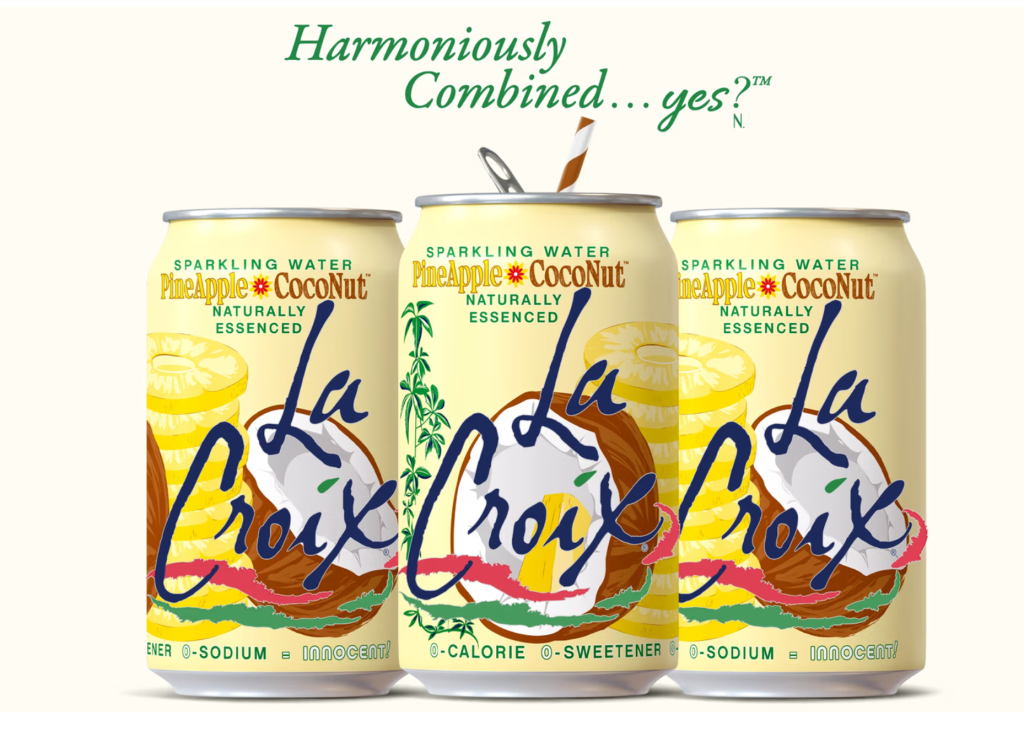
Images are a big theme with LaCroix — those colorful cans need to be advertised somehow! — but the captions or blogs that accompany them are carefully written to speak to a customer on a personal, informal level, which helps LaCroix foster relationships with its audience.
There’s a lot going on beneath the surface of the actual words. While the phrases may be short and concise, they relay a brand personality that’s fun, approachable and interested in having a good time with friends. The more the tone of voice emphasizes these qualities, the more customers associate LaCroix with social settings, friends and recreation. It’s also a masterclass in social engagement: hashtags, emojis and playful calls to action keep the conversation sparkling.
Professional and Ambitious – CloudSmartz
CloudSmartz, a Brafton client, embodies the brand tone of voice you want in speaking to decision-makers, management or executives. Writing about tech can be pretty difficult, even with a knowledgeable audience. There are a lot of abbreviations and jargon for readers to cut through before reaching the heart of the message; even if they know what SDN-WAN is, the clunkiness of phrasing can make reading awkward.
However, CloudSmartz breezes by those obstacles with a brand tone of voice that’s both aspirational and grounded. The possibilities of the cloud make such forward-thinking writing a fit, but it needs to be tempered in a way that still resonates with business leaders. Check out this example from a clinic in how to nail down such a persona:

The title “Virtualized Service Providers: The Next Stage of Telcom Evolution” sets the blog up to be in the vein of thought leadership, which CloudSmartz pulls off by making the writing accessible and not unwieldy. The brand personality balances ambition with clarity, illustrating that you can create a tone of voice that is both inspiring and easily digestible.
Strong and Aggressive – Harley Davidson
Most people can probably agree that they don’t want to be spoken to in an overly assertive way. But for Harley Davidson, that’s exactly what the brand does — and it makes sense. As a company that sells rough-and-tough motorcycles, its unique brand voice and brand personality appeal to its target audience: a group that’s often pegged as freedom-seeking souls that want nothing more than the open road.
Take one look at its website and social media channels for examples of the company’s rebellious, bold and rugged voice on full display:
With popular past ad campaigns using phrases like “All for freedom, freedom for all,” and “Screw it, let’s ride,” the company isn’t afraid to fiercely claim that its product is the best of the best and that riders who are lucky enough to own a Harley Davidson bike are as well. It can be said that the brand’s voice isn’t for the faint of heart, but for the independent customers seeking a high-quality bike that can follow them into Valhalla, it’s just right. Talk about tone and brand alignment!
So Far Out There It’s in Another Galaxy – Skittles
You’ve seen the Skittles commercials, you’ve cringed at the ads, you’ve wondered what the hell is going on — but you’ve also likely tasted the rainbow, as Skittles’ marketing implores you to. While being in the candy business might afford Skittles some leeway in getting weird, you certainly don’t see Almond Joy or Nerds pushing the outer boundaries of strangeness quite like Skittles.
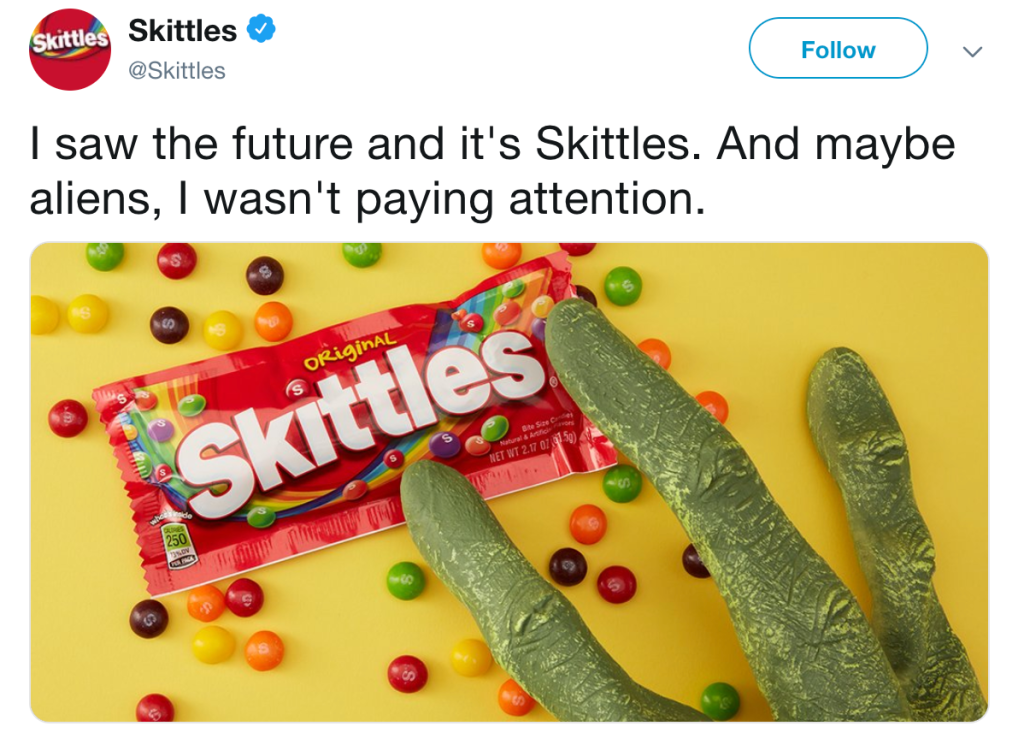
But the thing is, the Skittles tone of voice works! All the talk about Skittlespox and being the rainbow should be enough for any consumer to think twice, but Skittles has built a brand persona that is adored for its wackiness. One social media highlight includes:
This approach illustrates that, sometimes, creating a tone based on sheer surprise and delight can be a winning formula — provided it’s executed with consistency and strategic intent.
Just Straight Up Out of Pocket – Duolingo
When you think of one of the world’s best-known language-learning tools, Duolingo, it likely conjures up memories of those lessons you were totally planning to take before that trip abroad. But there’s probably something else that comes to mind: the company’s neon green mascot, Duo the owl.
Have you taken the time to scroll through the brand’s TikTok account?
Duolingo has never been known to mince words when it comes to reminding users to take their language lessons. In fact, it’s become a widespread meme online to joke about the brand’s tendency to sway more in the aggressive direction than the passive. So it was hardly a surprise that when the Duolingo social media team joined Tiktok, they came out swinging.
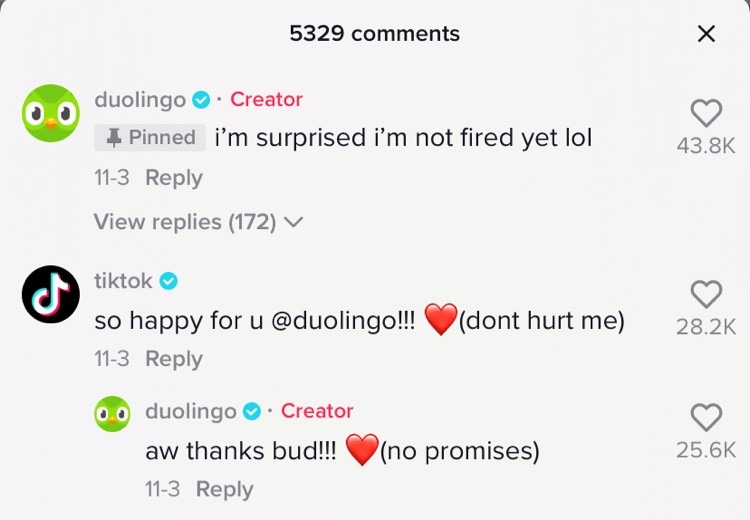
From videos documenting Duo the owl’s obsession with singer Dua Lipa to outright threatening users to practice their language of choice (“Spanish or vanish”), there’s only one way to describe Duolingo’s tone: out of pocket.
In the comment section, “Duo” interacts with almost every viewer, and as you can see here, it’s never that nice. By leaning into the meme and having fun with it, Duolingo proves that staying true to your brand and your audience’s perception of you is the best way to find your tone. It’s also a live case study in how to create a tone of voice that rides cultural waves without losing brand authenticity.
Would You Like Fries With That Sick Burn? – Wendy’s
When it comes to sassy brands online, there’s one OG that stands out from the rest: Wendy’s. Yes, that Wendy’s. The beloved fast-food chain featuring the founder’s daughter as a logo.
When Wendy’s first joined Twitter, the brand primarily stuck to business as usual: promotional content centered around the holidays and deals it was running. But as you can see for yourself, the holidays the account is talking about now are far from your warm-and-fuzzy family memories.
Unlike Duolingo, Wendy’s was never known for branding like this. In fact, when the team first re-launched its Twitter account with a sassier tone way back in 2017, it was quickly known as the roast heard round the world.
Although it doesn’t necessarily align with Wendy’s original branding, the reason this tone worked as well as it did was that it was the first of its kind. In an internet filled with advertisements and constant pop-ups, Wendy’s cut through the noise by being unapologetically different.
So while it may poke fun at other restaurants as well as its own customers, the honesty and (usually) light-hearted roasts on the account help the brand to stay at the top of every burger lovers’ mind. That’s the power of consistent tone voice — love it or hate it, you always recognize it.
Tips to Develop Your Brand Tone of Voice
While it helps to take your cue from these brands, in the end, your brand’s tone of voice has to be unique to your business. It may take some time to reach that point, but here are some basic tips to ensure your tone of voice fits your brand, your needs, your message and your customers’ expectations:
Create tone and brand voice guidelines: Tone can seem a bit like a nebulous concept, making it harder for businesses to grasp. However, you can take control by creating a set of standards or a voice guide to define your brand’s tone and govern how it’s used. Each organization should have a working set of standards for what the tone sounds like and how brand values are communicated. This helps keep all content creators, from video producers to eBook writers, on the same page. If you need inspiration, study the Apple tone of voice or Slack tone of voice documentation — both are public and widely praised.
Be consistent across channels: Building a reputable brand tone of voice means keeping it consistent across channels. Skittles is as weird on Twitter/X as it is in blog posts. Nike’s tone of voice, meanwhile, is just as motivational in a 30-second ad as it is in a long-form feature. This consistency helps foster familiarity: A customer reading your articles and then transitioning to a social media account should have the same experience in interacting with your brand, and tone of voice is central in creating that continuity.
Take a page from industry peers: Although there is no one right tone, what industry you operate in will have a lot of say in how you formulate your tone of voice. After all, nonprofits will maintain a very different way of communicating than a corporation would. Look at what peers and competitors in your space have done. This might either help you develop a tone along the same lines to connect with readers, or tell you a totally different approach to tone that could help you win over new customers.
Don’t be a copycat: What word choice and tone works for Skittles and Wendy’s might not work for you — and even if it does, you won’t want to copy them exactly. Instead, choose a few brands to be your style and personality role models, letting them inspire and inform your approach but not define it. Remember, this is your time to develop something fresh, special and unique to your business.
Launch a rebranding campaign: If you have a brand voice your audience is familiar with, but it’s just not working, don’t start feeling trapped. Instead, consider a rebranding campaign — an opportunity to reintroduce yourself to your customers with a fresh personality, an innovative style and a different tone. Just don’t go overboard; a rebranding campaign should only happen once (or maybe a few times, if your brand carries on through hundreds of years). Make sure you accompany the relaunch with up-to-date tone voice guides so every stakeholder can deliver on the new promise.
Find Your Voice
It will take some time to perfect your company’s tone of voice. Using these strategies will help you take the first steps in building that recognizable brand identity — and in the meantime, you can start brushing up on all the content type options you’ll be able to build with your new personality and style. Remember: The sooner you create tone voice documentation and embed it into your workflows, the sooner you’ll see a measurable impact on engagement, loyalty and revenue.
As Chris Hassan puts it, “The process of finding your brand’s voice isn’t about chasing trends or quick wins — it’s about uncovering what makes your message resonate and ensuring that voice is present in every piece of content you share.”
Editor’s note: Updated April 2026.