

What Is a Testimonial?
A testimonial is a statement made by a satisfied customer that provides assurance about the quality and value of your brand. Unlike a case study or a success story, a testimonial is typically concise, authentic and focused on the customer’s experience. When customers write testimonial blurbs, participate in a video or share a social media post, they lend your company the credibility that only real people can supply.
Here’s how to start writing testimonials that can improve credibility and turn one happy customer into even more happy customers!
7 Types of Testimonials
You know that testimonials are powerful tools, but which type will work best for sharing customer success? There are many ways to tell a compelling story, and the best format depends on your collateral and goals.
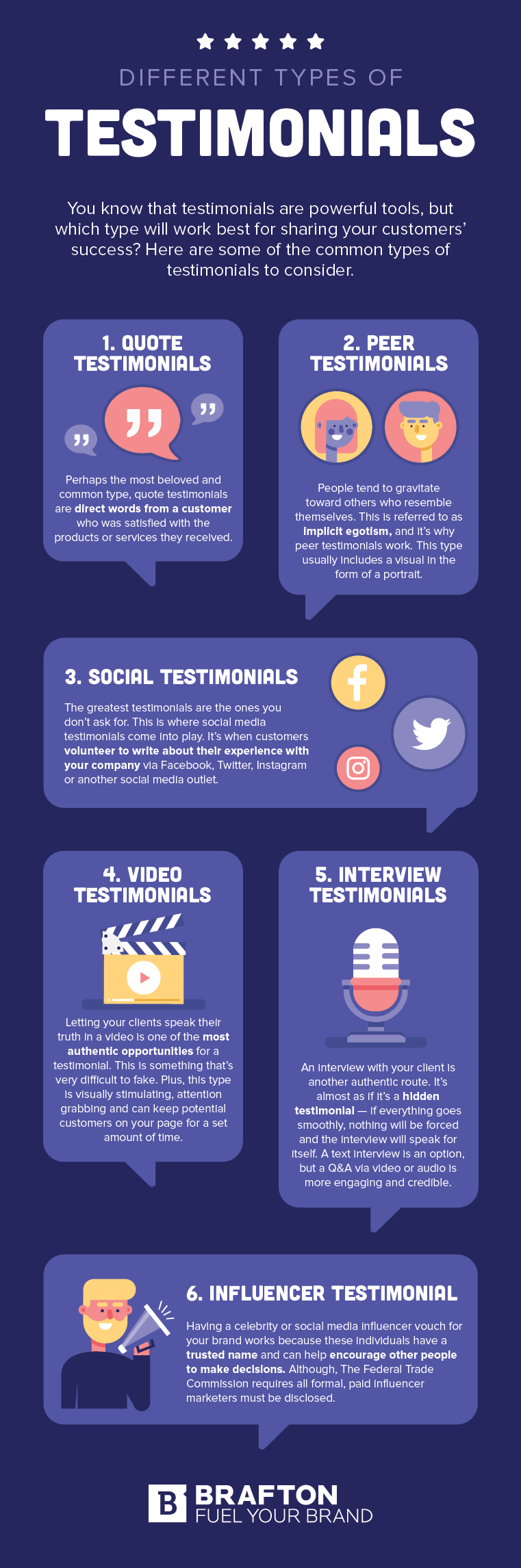
Here are seven common types of testimonials:
1. Quote Testimonials
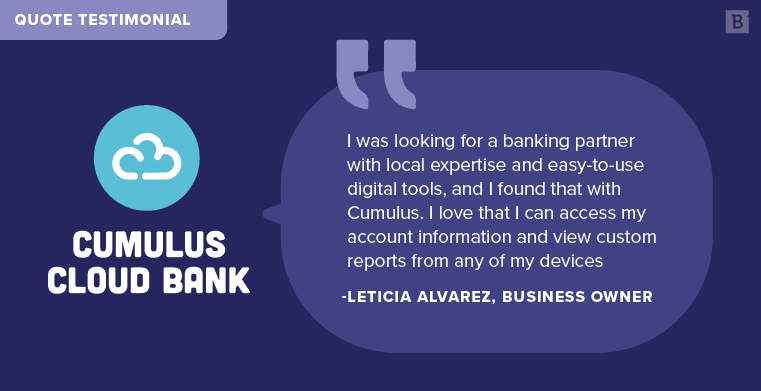
Direct words from a customer who was satisfied with the products or services they received. Quote snippets are easy for newcomers to write and require minimal formatting.
2. Peer Testimonials
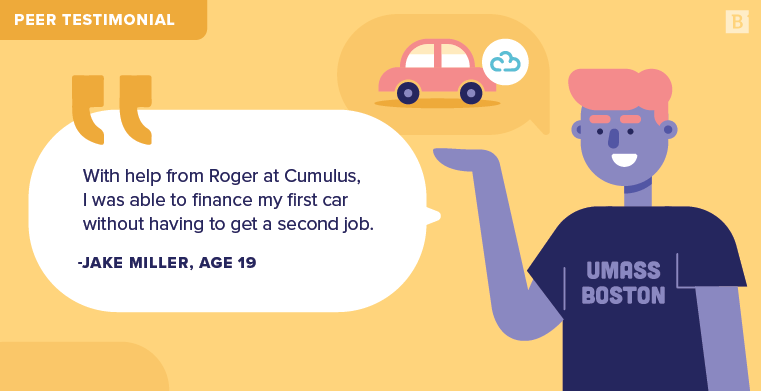
Testimonials from people of similar status to the audience. These often include a portrait and are especially relatable. For example, this could be two finance executives sharing stories on LinkedIn about your software.
3. Social Testimonials
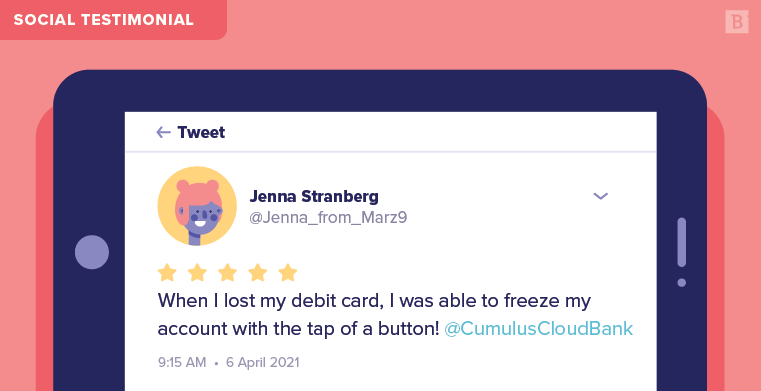
Testimonials that customers volunteer via Facebook, Twitter, Instagram or other social media. These are ultra-organic and add another layer of credibility. Reposting a client’s testimonial Instagram post gives potential clients a real-time window into authentic customer experience.
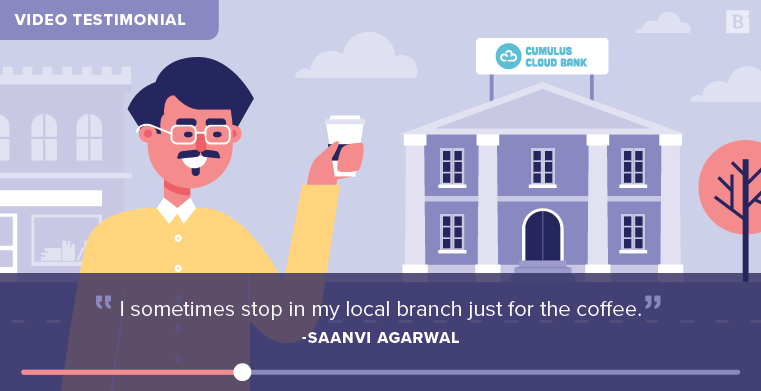
4. Customer Video Testimonials
Letting your customer speak their truth in a video. Video testimonials are visually stimulating and attention-grabbing. Tools like online screen recorders make it easy for customers to share their experiences from anywhere.
5. Interview Testimonials
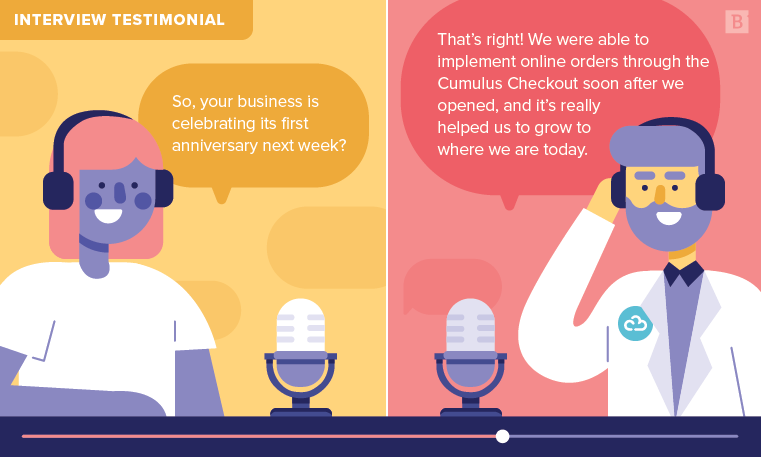
An interview with your client. Text interviews or Q&As via video/audio are often more engaging and provide multiple sound bites for social media posts.
6. Influencer Testimonial
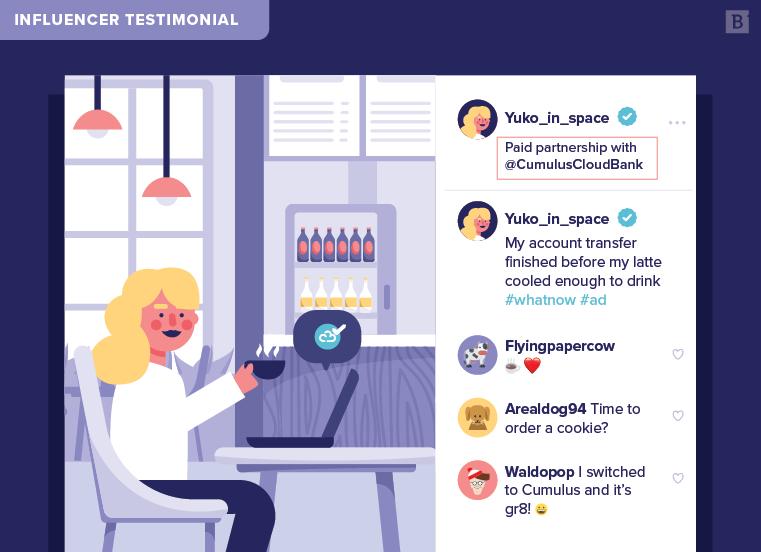
A celebrity or social media influencer vouching for your brand. These testimonials leverage trusted names to encourage others to consider your products. The FTC requires disclosure for all paid influencer campaigns.
7. Employee Testimonials
Employees sharing what their job looks like or their favorite parts of what they do. Employee testimonials speak to both prospective customers and job applicants, showing off your organization’s culture and collaborative environment.

Subscribe to
The Content Marketer
Get weekly insights, advice and opinions about all things digital marketing.
Thanks for subscribing! Keep an eye out for a Welcome email from us shortly. If you don’t see it come through, check your spam folder and mark the email as “not spam.”
How to Write a Testimonial (5-Step Framework)
To turn customer stories into social proof, follow these five steps:
- Determine the challenge your client faced.
- Walk through what you did to solve the problem, including a quick product or service description where relevant.
- Explain how your solution was different from other options.
- Describe your customer’s experience from start to finish and highlight any compelling results.
- Conclude with your overall message, such as a call to action or a link to more success stories (e.g., a testimonial Instagram post or a longer write-up).
Your goal is to show potential clients how your business delighted people just like them. Focus on the relationship you built with your happy customer; the customer should always be the main character of the story, not your business.
3 Testimonial Writing Frameworks (and When to Use Each)
There are several proven frameworks for writing testimonials. Choosing the right one depends on your goals and the type of story you want to tell.
Problem–Solution–Result (P-S-R)
Structure:
- Problem: What challenge did the customer face?
- Solution: What did your company do to help?
- Result: What changed for the customer?
Best for:
Versatile testimonials, especially when you want a clear, concise narrative.
Example:
“Our website was struggling to convert visitors. This brand revamped our landing pages, and now our conversion rate has increased by 40%.”
Before–After–Impact (B-A-I)
Structure:
- Before: What was the situation before your product/service?
- After: What happened after implementation?
- Impact: What lasting effect did it have?
Best for:
Transformation stories and customer success narratives.
Example:
“Before, our content was inconsistent. After partnering with this business, our blog is updated weekly and engagement has doubled. The impact is a steady stream of qualified leads.”
STAR (Situation–Task–Action–Result)
Structure:
- Situation: What was happening?
- Task: What needed to be done?
- Action: What steps did your team take?
- Result: What was the outcome?
Best for:
B2B testimonials, enterprise clients and detailed case studies.
Example:
“Situation: Our team needed to launch a new product quickly. Task: Develop a go-to-market strategy. Action: The business provided a comprehensive plan and executed targeted campaigns. Result: We launched ahead of schedule and exceeded sales targets.”
Framework Comparison Table
| Framework | Best For | Strengths | Weaknesses | Example Use |
| P-S-R | Most testimonials | Concise, clear | May lack detail | Product reviews, quick quotes |
| B-A-I | Transformation stories | Emphasizes change | May be too broad | Customer success, rebranding |
| STAR | B2B, case studies | Detailed, structured | Can be lengthy | Enterprise, complex projects |
Tips for Writing a Great Testimonial
- Give customers an experience to remember. Approach every interaction as a future testimonial; strong customer service can blossom into a resonant personal testimonial.
- Reach out to your connections. Talk to clients with whom you have a strong relationship. When you request feedback, write testimonial email prompts that outline next steps and expected outcomes.
- Set clear expectations. Let your subject know how the process works and if they can review your writing before publication.
- Gather specific information. Include the contact’s name, title, company and logo. Concrete facts elevate testimonials above vague praise.
- Ask good questions. Some customers are natural storytellers, others need guidance. Sample questions:
- What problem were you facing?
- What prompted you to reach out?
- If you could choose one word to describe your experience, what would it be?
- What does your future look like with our product/service?
- Would you share your feedback in an Instagram post or other social media testimonials?
- Keep things short and sweet. Focus on the most important details. Brevity is critical, especially for testimonial Instagram captions.
- Be authentic. Don’t exaggerate; authenticity transforms basic client feedback into persuasive success stories.
- Be visually engaging. Use images, videos and social media embeds. A carousel of client testimonial Instagram graphics can reinforce the written narrative.
Real Testimonial Examples That Work
Proactiv
Proactiv uses peer testimonials to show how their products work for people dealing with acne. Their results and reviews page shares customer journeys and quotes. (Note that there’s a difference between reviews and testimonials, but presented correctly, they can be used in similar ways.)
“Face and body acne can be frustrating, but you’re not alone. If you’re wondering whether Proactiv will work for you, you’ve come to the right place. Here, you can see ratings and read reviews from real customers like you who have experienced dramatic transformations after using Proactiv. If you’re ready to change your skin and your life, try Proactiv®. We’re here to get you clear!®”
Why it works: Proactiv evokes an emotional response from readers who want to know how well the products worked for others. This makes them relatable and encourages trust.
Family Reach
This Family Reach Testimonial comes from one of our own clients. It’s a strong example of customer storytelling:
“Brafton came in and started telling real patient stories, going behind the scenes into families’ homes and meeting with caregivers and cancer patients and children with cancer, really helping us pull back the curtain so you can feel the impact that Family Reach has and the reality that these patients are going through.”
— Carla Tardiff, CEO, Family Reach
Why it works: Quotes are a great way for customers to express themselves and their satisfaction at the same time. Seeing someone praise a company in their own words can really make a difference for your customers, especially if the testimonial includes details about how and why your work works.
Shopify
Shopify’s testimonials use the interview tactic, giving clients a chance to share their personal business stories. By the end of each interview, customers describe how Shopify helped them grow their businesses. Interestingly, many of these stories could also technically act as influencer testimonials because they come from familiar brand names, including Claire’s and Tupperware.
Why it works: Interviews provide a personal dive into a customer’s experience. The big brand names prove that Shopify can adapt to all kinds of needs.
ChowNow
ChowNow’s case studies page features stories from “restaurants like yours,” providing stats and big wins to show off the brand’s positive impact. The homepage also features testimonial quotes and star ratings as readers scroll.
Why it works: Combining testimonials and case studies is a great way to catch readers at different levels of research. Plus, ChowNow’s page is beautifully designed, with all vital information readily available. Snippets are repurposed as social media reviews and Instagram posts, extending the reach of every testimonial.
Benefits of a Good Testimonial
- Build trust and credibility. Customer testimonials fill the void of skepticism and provide credibility for your brand. Multiple voices create a consistent pattern of value.
- Connect emotionally. Emotion-based decision-making is an opportunity for your brand.
- Boost persuasiveness. Testimonials lay the groundwork for future relationships even before you meet a client.
- Tell a compelling story. A well-written testimonial can inspire potential customers to start their own story with your brand.
- Build your company’s personality. Testimonials show that your company is made up of real people, not just marketers.
- Increase conversions. Pages with testimonials are powerful. A well-placed testimonial Instagram post, case study or quote can nudge buyers toward checkout.
How to Write a Testimonial — FAQ
How Long Should a Testimonial Be?
A testimonial should be concise, ideally between 1–3 short paragraphs or 50–150 words. For social media, keep it under 100 words or a few sentences.
What Makes a Testimonial Believable?
Believable testimonials are authentic, specific and include real names, titles, companies and (when possible) photos or logos. Avoid exaggeration and vague praise.
How Do You Ask a Customer for a Testimonial?
Reach out directly, explain why you value their feedback and provide a simple framework or questions. Make it easy for them to respond.
What’s the Difference Between a Testimonial and a Case Study?
A testimonial is a short, customer-driven statement about their experience. A case study is a detailed narrative outlining the problem, solution and results, often with data and analysis.
What’s the Difference Between a Testimonial and a Review?
A testimonial is typically solicited and used for marketing, focusing on positive experiences. A review can be positive or negative and is often posted publicly on third-party platforms.
Can You Write Your Own Testimonial?
You can draft a testimonial for a client’s approval, but it must reflect their authentic experience and be reviewed by them before publication.
Are AI-Generated Testimonials Legal?
AI-generated testimonials are not considered authentic and can violate advertising laws. Only use real customer feedback.
What Does the FTC Require for Testimonials?
The FTC requires that testimonials be truthful, not misleading and disclose material connections (such as payment or gifts). See FTC guidelines.
Should Testimonials Include the Customer’s Photo?
Including a photo or logo increases credibility and authenticity, but always obtain permission before using images.
How Do You Mark Up Testimonials With Schema?
Use Review schema to mark up testimonials for search engines, including reviewer name, rating and description.
Additional Resources
- Testimonial Design Best Practices
- Testimonial Advertising Examples
- How to Ask for a Review: Top Tips
- Video Testimonial Guide
Editor’s Note: Updated July 2026.