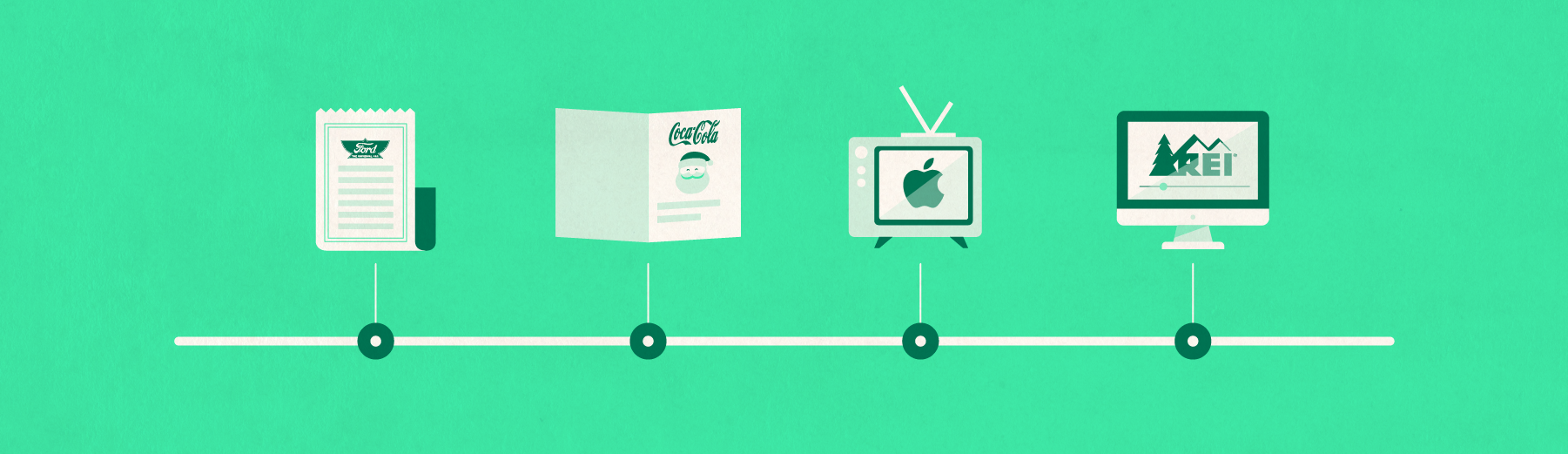

From single-celled sales sheets all the way up to complex ecosystems that rely on interdependent relationships among products, businesses and customers, the evolution of marketing is quite a tale. Every new concept, channel and technology reshapes the relationship between a brand, its products or services and its target audience.
It gets even more impressive when you think about the fact that this process of natural selection has only been going on for just a little over a century. By tracing these marketing eras, we can see how production concept, product concept and selling concept strategies gradually gave way to more data-driven, customer-centric approaches that leverage modern marketing tools, from social media platforms to search engine optimization (SEO) best practices.
The Evolution of Marketing: A 120-Year History
While there are different schools of marketing thought in terms of the origin of the discipline and its various phases, the dawn of the 20th century is a good starting point for our purposes.
Over the past 12 decades, marketing has gone from the simple act of informing potential consumers about the existence of a certain product to a complex web of interactions that take place in person, through print, over the airwaves and on social media. Today’s practitioners must master the full marketing mix — product, price, place and promotion — while remaining agile enough to adapt to new marketing frameworks and rapidly shifting consumer behavior.
What Is the Evolution of Marketing?
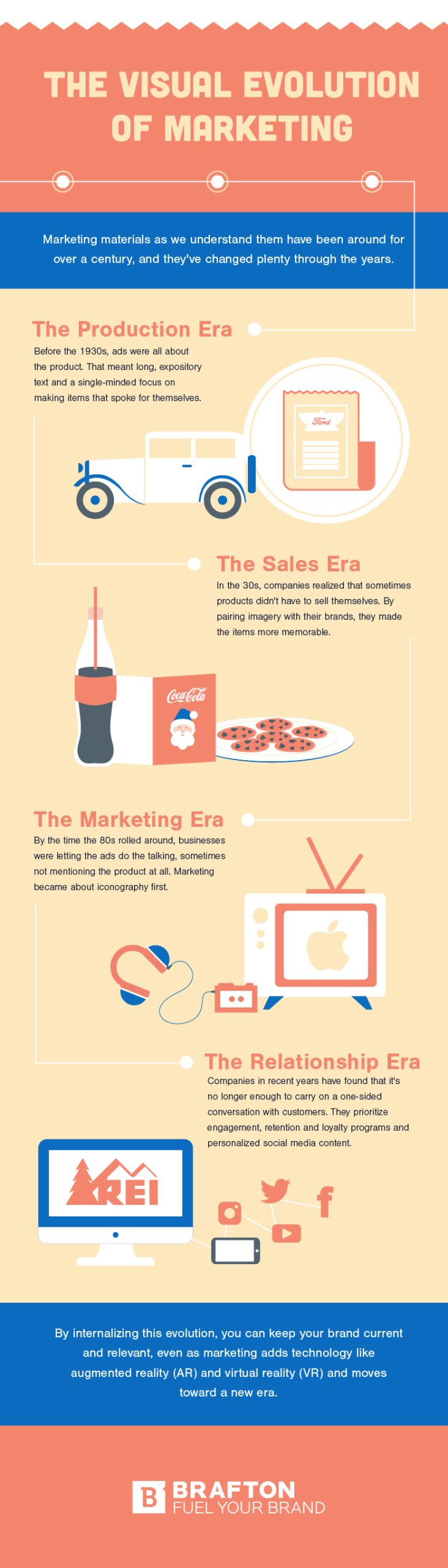
Marketing evolution refers to the distinct phases that businesses have gone through to achieve, maintain and increase revenue through customer sales and partnerships. Since the 1900s, industries tried a variety of different strategies, many of which speak directly to the foundational principles of market segmentation, positioning and the ongoing quest to meet customer expectations.
Over time, marketers have embraced more sophisticated marketing strategies, weaving together personal selling, advertising, PR, direct mail, telemarketing and, eventually, digital channels such as search engine marketing, SEO and social media marketing campaigns. Each advancement adds a new layer to the narrative, demonstrating how the right tools can spark successful marketing outcomes.
When Did the Marketing Discipline Begin?
The answer to this question is fairly nuanced. To get a rough sense of the origins of marketing, let’s turn to the Online Etymology Dictionary. The authors trace this term back to the 1560s, when it was used to describe “buying and selling, [the] act of transacting business in a market.” That’s a pretty literal definition, but it’s a good reminder that prior to the creation of marketing concepts, “marketing” still existed. It was just a pretty straightforward activity that relied mainly on barter, word of mouth and face-to-face personal selling.
According to our dictionary, the first cited use of the word “marketing” in its modern business sense — the “process of moving goods from producer to consumer with [an] emphasis on advertising and sales” — comes from 1897. Not coincidentally, this is the same era in which the production concept was flourishing and the earliest experiments in mass communication — magazines, newspapers and catalogs — began shaping how companies approached concept marketing.
While it took some time for the field to move from a product-centric approach to what we understand as a marketing orientation today, the roots of this discipline go back to the turn of the 20th century. Many experts mark this as the informal “introduction of marketing” moment, when marketing management emerged as a distinct business function worthy of its own budgets, departments and scholarly research.
What Causes Marketing To Evolve?
Two central factors drive marketing evolution:
- Marketing technology: When the field began, illustrated print advertising was one of the only feasible communication channels available to marketers besides in-store merchandising and in-person interactions. Today, digital marketing leverages technologies ranging from multimedia text messages to email and more. Sophisticated search engine algorithms, artificial intelligence-powered analytics and a wealth of marketing tools allow brands to turn raw information into data-driven insights, continually refining their marketing strategy at scale.
- Customer needs: What do consumers demand today that they didn’t yesterday? What can they afford now that was beyond their reach in the past? If you can’t keep up with your audience, your competitors definitely will. Understanding consumer behavior through market segmentation and persona development has become a non-negotiable element of successful marketing, helping brands deliver the right product or service to the right target audience at precisely the right time.
Comparing the Marketing Eras
| Era | Rough Dates | Key Driver | Dominant Channel | Example Brand |
| Production Era | Early 1900s–1920s | Mass production | Print, in-person | Ford |
| Sales Era | 1930s–1950s | Competition, persuasion | Print, radio, TV | Coca-Cola |
| Marketing Era | 1960s–1980s | Consumer needs | TV, print, segmentation | Apple |
| Relationship Marketing Era | 1990s–early 2000s | Loyalty, retention | Direct mail, CRM, events | REI |
| Digital Era | Mid-1990s–mid-2000s | Internet, interactivity | Websites, email, search | Amazon, Google |
| Social & Content Era | mid-2000s–mid-2010s | Community, storytelling | Social media, content | Dollar Shave Club |
| Data & Personalization Era | mid-2010s–early 2020s | Personalization, privacy | Mobile, automation, CRM | Spotify, Netflix |
| AI & GEO Era | 2022–present | AI, generative engines | AI platforms, search | OpenAI, Notion |
What Are the Different Stages in the Evolution of Marketing?
For our purposes, we’ll discuss eight distinct phases of marketing evolution. While experts are somewhat divided in their interpretations of the various strategies that marketers have used to connect products with consumers and vice versa, we think these are the most important steps to study:
- Production.
- Sales.
- Marketing.
- Relationship.
- Digital.
- Social and content.
- Data and personalization.
- AI and GEO.
The Production Era: Products Develop From the Primordial Soup
The Industrial Revolution set the stage for modern marketing. All of the right ingredients were amassed, resulting in marketing as we now know it: the promotion of mass-produced consumer products.
Accordingly, early marketing efforts assumed a production orientation. The working theory was that customers simply needed to be informed about what goods were available to them. After all, you can’t buy something if you don’t know it exists. In this marketing philosophy, the emphasis was squarely on efficiency, cost reduction and the delivery of a quality product at scale — the textbook definition of the production concept.
Henry Ford’s Model T
This approach is perhaps best summed up by a quote from Henry Ford: “If you have a really good thing, it will advertise itself.” The company’s approach was heavy on text and highly informational, emphasizing price, quality and standardization. Such tactics fit neatly within the selling concept, where the onus was on manufacturers to push inventory through persuasive copy rather than nuanced customer analysis.
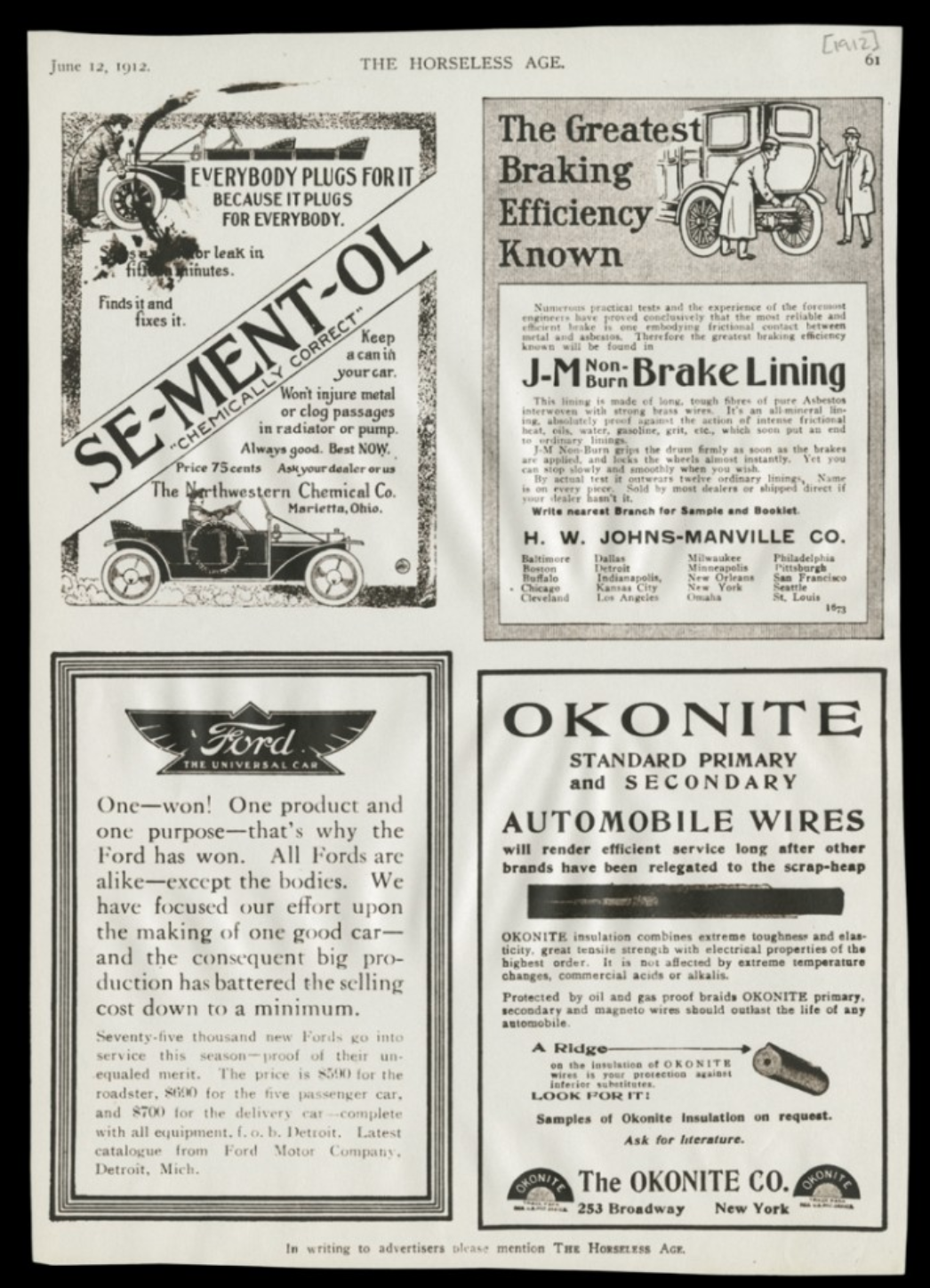
In fact, the automaker was so focused on production that national advertising ceased entirely during periods of high demand. Though individual dealers continued placing local ads featuring nominal branding resources supplied by the company, Ford stopped advertising between 1917 and 1923.
Meanwhile, a different marketing era was starting to take shape, illustrating how evolution marketing never remains static for long.
The Sales Era: Species Diverge and Brands Emerge in Marketing
Leveraging a production orientation is fine if you’re pretty much the only game in town. From the 1930s onward, though, it became increasingly rare that any company would permanently enjoy a competitor-free environment. So, in response to the pressures of natural selection, businesses developed unique adaptations. This resulted in two core innovations of modern marketing: the central importance of brand identities and an emphasis on the selling orientation.
During this period, personal selling, catchy slogans and aggressive promotional tactics dominated, reflecting a growing appreciation for marketing strategies that could sway undecided consumers and differentiate nearly identical products and services on crowded shelves.
A Very Coca-Cola Christmas
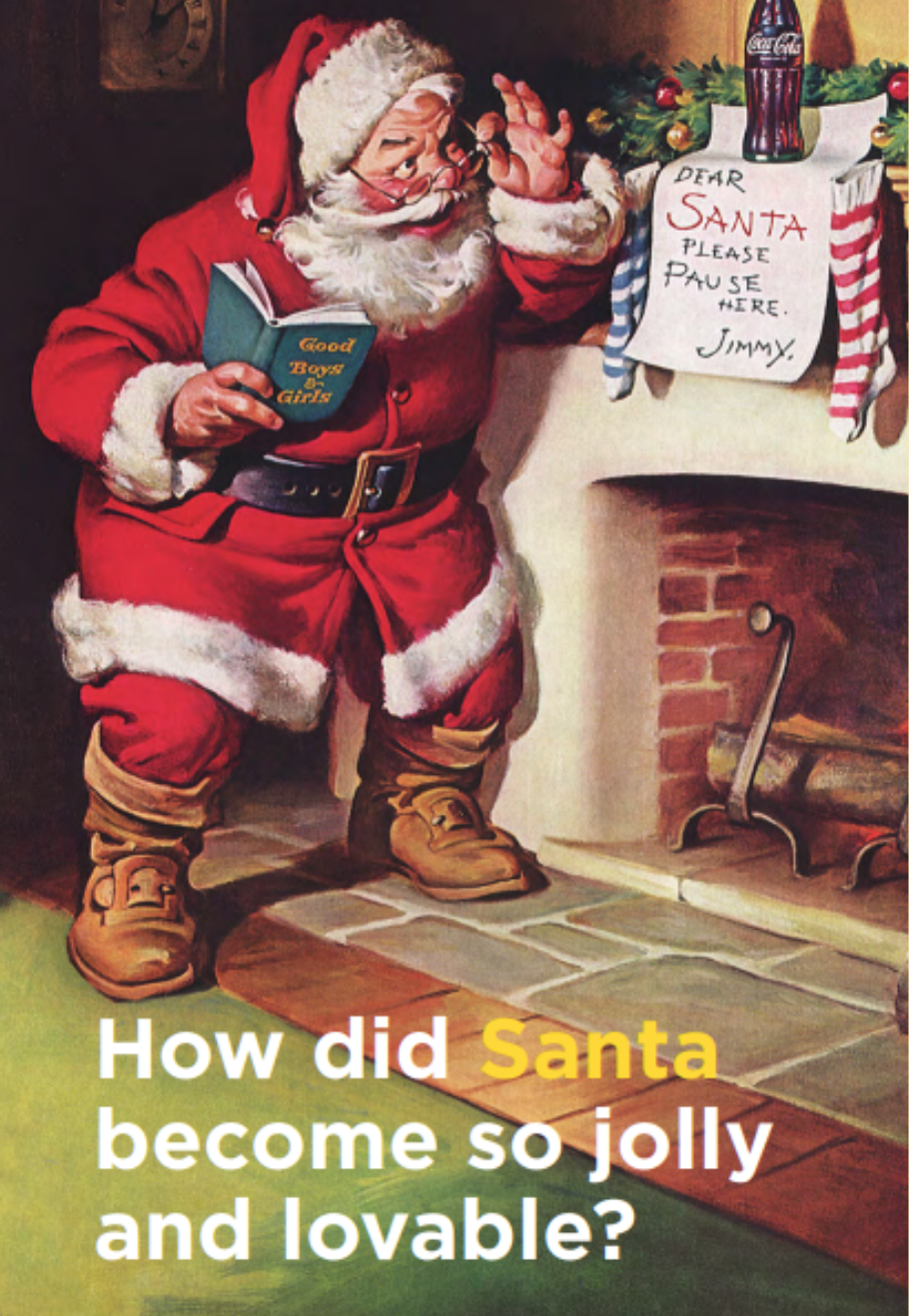
Would it be a stretch to say that the sales era gave us Santa Claus? Only a little bit.In the 1920s Coca-Cola focused on driving sales by attaching its brand to Santa Claus. To make it work, marketers had to solidify an image of Santa that would appeal to consumers. In 1931, they found what they were looking for in the illustrations of Haddon Sundblom. Until 1964, Sundblom would continue to produce images in the iconic Santa style that we still know and love today. This was concept marketing at its finest: using emotional resonance and clever positioning to elevate a commodity product into a cherished holiday tradition.
The Marketing Era: Intelligent Adaptations Focus on Meeting Customer Needs
The development of a marketing orientation represented something of a sea change. While traditional marketing had focused on simply getting products to customers and convincing them to buy, this new approach was different. Marketers were driven to better understand consumers’ needs, concerns and desires. Only then could businesses hope to truly make an impact. By the 1980s, customers were in charge.
During this time, frameworks like the marketing mix gained mainstream acceptance, encouraging brands to balance product, price, place and promotion in a way that resonated with very specific market segments. Influential thinkers such as Philip Kotler helped formalize the discipline, turning marketing management into a rigorous, data-driven science that could be taught in classrooms and applied in boardrooms.
Apple Breaks Through
Apple’s 1984 Super Bowl commercial announcing the debut of the Macintosh personal computer never even shows a Mac.
It doesn’t talk about any of its features. It’s not about getting you to buy a product. The entire commercial is centered on the premise that a new world is possible by taking a different approach to the adoption of technology — one that places individual consumers, not big companies, firmly at the center. It’s a textbook example of successful marketing built on deep consumer insight, bold storytelling and an unwavering commitment to delivering a product concept that aligns with emerging user expectations.
The Relationship Marketing Era: Loyalty and Retention Take Center Stage
By the 1990s and early 2000s, relationship marketing became a dominant philosophy as brands sought to foster customer retention and loyalty. Instead of focusing solely on transactions, marketers invested in building long-term connections through customer relationship management (CRM), loyalty programs and community-building events.
Direct mail, early email marketing and CRM systems were used to keep audiences engaged. Social responsibility started to become a core value, as brands tried to be perceived as partners in their customers’ lives. In many circles, this evolved into the broader societal marketing concept, balancing commercial objectives with stakeholder welfare.
At REI, You’re a Member
Outdoor equipment and athletic outfitter REI operates on a co-op model where customers can become members. For a one-time fee, members have access to several perks, including the ability to shop at Garage Sales where steep discounts are available. This strategy facilitates serious brand loyalty. By weaving together membership perks, community events and targeted communications, REI demonstrates how relationship marketing, societal marketing and personalization can coexist in a single, highly effective strategy.
The Digital Era: New Habitats Emerge Online
From the mid-1990s to the mid-2000s, marketing underwent a seismic shift with the rise of websites, banner ads, search engines and email marketing. Brands moved from physical and broadcast channels to two-way digital interactions, requiring the development of entirely new strategies and skill sets.
Websites became the new storefronts, and search engines like Google transformed how consumers discovered products and services. The launch of Google AdWords in 2000 marked a turning point, enabling brands to target audiences with unprecedented precision. Amazon pioneered digital-native marketing, building a scalable model for ecommerce and customer experience.
This era laid the groundwork for search engine optimization and digital marketing tactics that are now standard practice. For more on digital marketing’s evolution, see Brafton’s guide to content marketing and our infographic on the evolution of content marketing and SEO.
The Social and Content Era: Symbiotic Bonds Reshape the Landscape
From the mid-2000s to the mid-2010s, social media platforms like Facebook, Twitter (now X) and YouTube exploded onto the scene, fundamentally changing how brands and audiences interact. The rise of inbound marketing, the content marketing boom and brand storytelling at scale made audiences co-creators of the brand experience.
Brands began to build communities, not just customer lists. Dollar Shave Club’s viral 2012 launch video and Old Spice’s “The Man Your Man Could Smell Like” campaign are iconic examples of this era, where content and conversation drove engagement.
This is also the era Brafton was built for. Our agency was founded to help brands navigate the new landscape of content marketing, storytelling and digital engagement. Learn more about our approach in Brafton’s social media marketing guide and our content marketing services.
The Data and Personalization Era: Adaptation at the Individual Level
From the mid-2010s to the early 2020s, marketing became hyper-personalized and data-driven. Mobile-first strategies, programmatic advertising, CRM-driven personalization, customer data platforms, marketing automation and privacy regulations (GDPR 2018, iOS 14, the death of third-party cookies) reshaped how brands connect with individuals.
The marketer’s job shifted from broadcasting to assembling one-to-one experiences. Spotify Wrapped and Netflix’s recommendation engine are prime examples of brands using data to create personalized, memorable interactions.
For tips on personalizing your marketing strategy, check out Brafton’s guide to promotion ideas and our B2B content marketing solutions.
The AI and GEO Era: Machine Intelligence Joins the Ecosystem
Since 2022, generative AI and GEO (Generative Engine Optimization) have begun to transform marketing once again. The launch of ChatGPT in November 2022 marked a new era where AI-powered tools, Google AI Overviews and LLM visibility are central to marketing strategy.
Brands now optimize not just for clicks, but for citations inside AI-generated answers. OpenAI’s zero-traditional-marketing launch, Notion’s AI-native go-to-market and Perplexity’s conversational search are examples of how machine intelligence is changing the marketing ecosystem.
Brafton is at the forefront of this transformation, helping clients master AI Overviews and generative engine optimization.
The Next Era: Where Evolution Goes From Here
The future of marketing is being shaped by agentic AI, ambient and voice-driven experiences, the further blurring of brand-as-platform and the maturation of sustainability and purpose-driven marketing. As generative engines and conversational AI redefine how people discover and interact with brands, the marketing funnel itself may be reshaped entirely.
Brands will need to balance privacy, personalization and societal value, navigating a landscape where AI-powered platforms and ambient interfaces become the new norm. The open question: Will marketing become less about optimizing for clicks and more about optimizing for visibility and trust inside AI answers?
For brands and marketers, adaptability is the new survival skill. The evolution continues — and those who embrace change, leverage new marketing tools and build authentic connections will thrive.
Do the Marketing Evolution
It’s been a stunning 120 years of marketing evolution. The next century will likely take us in directions that nobody can fully comprehend right now. One thing’s for certain: The fittest will survive, and the brands that balance clever marketing tools with genuine societal value will lead the charge into the future.
For more on branding, content and digital strategy, explore Brafton’s brand ambassador insights and Brafton’s B2B content marketing expertise.
Editor’s Note: Updated May 2026